<img alt="" src="https://www.365operation.com/807283.png" style="display:none;">

Subscription Box Fulfillment Services

KSP runs subscription box fulfillment around your cycle date. Components are received and counted against each box variant. Boxes are pre-kitted in a batch or built as orders drop. Every build is checked against its bill of materials before it closes. Then boxes ship in planned waves from one national inventory pool.
  • 50,000 sq ft kitting floor
  • 99.999% pick accuracy
  • 2 PM CST same-day cutoff for daily orders

Veteran-owned 3PL. Built for brands shipping 500+ orders a month.
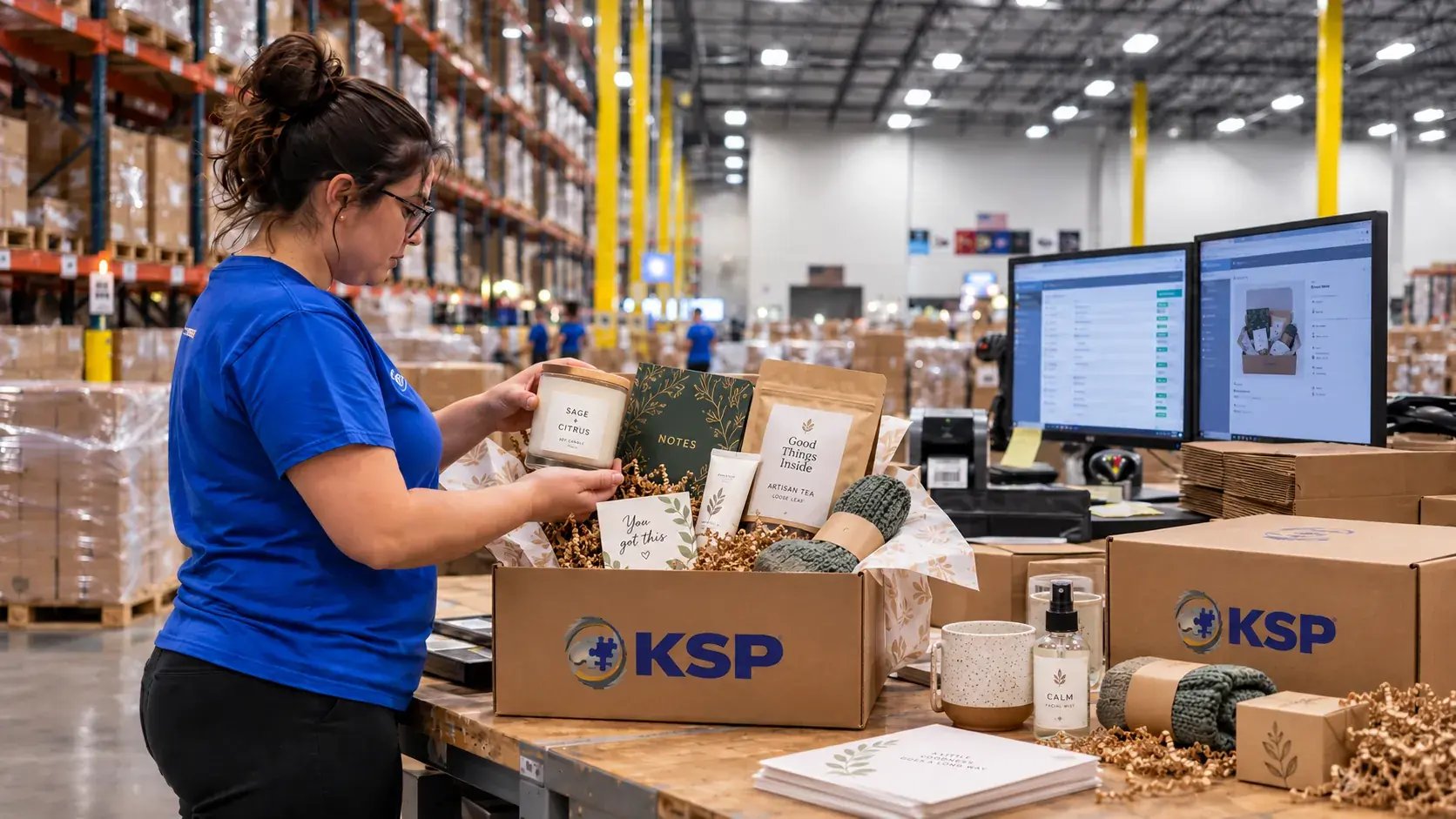
ksp-subscription-box-fulfillment-kitting-station

What Does a Subscription Box Fulfillment Center Do?

A subscription box fulfillment center receives components from your suppliers and stores them against each box variant. It assembles or pre-kits boxes to a fixed cycle date and inserts the right cards and samples. It ships the whole subscriber file in planned waves. Between cycles it handles new sign-ups, replacements and one-off orders as regular daily fulfillment.
Standard ecommerce fulfillment picks what's ordered, when it's ordered. A subscription program is different: most of the month's volume is known in advance and due on one date. Contents change every cycle, and a wrong insert shows up in an unboxing video. The warehouse work is a scheduling problem as much as a picking problem. Components have to land before the build window. The subscriber file has to lock before the build starts. Skips and pauses have to be reflected before labels print.

Subscription Box Inventory Management: Pre-Kit, Kit-to-Order or Hybrid

The inventory model decides your cost, your leftover risk and how fast a cycle ships. Pick it per cycle, not once.
ModelHow it works and when it fitsWatch for
Pre-kit (batch build)
Components are built into finished boxes before ship day and stored as one finished-box SKU. Fits one or a few variants with a subscriber count that locks early.
Unshipped pre-kits after skips and cancels. Agree the overage and what happens to it (hold, rework, sell as one-off) before the build.
Kit-to-order

Components stay as separate SKUs and each box is built as its order releases. Fits many variants (size, preference, add-ons) or a subscriber file that changes late.

Slower per box, and build labor lands on ship days.
Hybrid

The core box is pre-kitted; personalized items or add-ons are picked at pack-out. Fits a standard box plus a few choice items.

Two BOMs to maintain: the core kit and the pick-at-pack items.
Whatever the model, component counts are tracked by SKU in the WMS, with lot and expiry capture where the product needs it. You can see what's committed to the next cycle and what's left over. Kitting mechanics like BOM staging and batch assembly are covered in our subscription box kitting guide.

How a Subscription Cycle Runs at KSP

Five steps, dated backward from your ship date. The dates are agreed per program before the first cycle.
  1. Spec lock

    You confirm contents, variants, inserts and packaging for the cycle. The BOM is set per variant, and changes after this date are handled as a new version.
  2. Components received

    Supplier shipments are received and counted against the BOM. Shortages are flagged against the cycle calendar while there is still time to act.
  3. First-article build

    One box per variant is built and photographed for approval before the batch starts.
  4. Subscriber file lock and build

    Your platform's order file for the cycle, with skips and pauses already applied, sets the build count. Boxes are pre-kitted or built to order.
  5. Ship wave and reconciliation

    Boxes ship in planned waves; tracking flows back to your platform. Leftover components and unshipped boxes are counted and reported for the next cycle.

How KSP Checks Every Subscription Box Before It Ships

Subscription boxes fail in public: a missing featured item or the wrong insert card gets posted. Checks sit where those errors happen, on the build and on the order.

When boxes move into fulfillment

  1. Identify the tote

    The associate scans the tote barcode so the pick is tied to the right container.
  2. Verify the item

    The unit or finished-box barcode is checked against what the WMS expects. A mismatch does not register and has to be corrected before the workflow continues.
  3. Measure the packed carton

    Cartons pass certified scales and dimensioners before labels print. Measured weight and dimensions feed the manifest and multi-carrier rate shopping.

Less travel. More time for verification.

60 Locus AMRs move order containers through picking, cutting associate travel so time goes to picking and verification.
 
pick accuracy
99.999%
Locus AMRs on the floor
60
Same-day cutoff for daily orders
2 PM CST
Fulfilled from KSP's FDA-registered facility in Brooklyn Park, MN: a ~225,000 sq ft building with 29 dock doors.

Subscription Platforms and How Orders Reach the Warehouse

Your subscription platform owns billing, skips, pauses and swaps. KSP fulfills the orders it releases. The connector decides how clean that handoff is, so confirm the path for your platform before the first cycle.

Storefront Shopify / Shopify Plus
Direct connector
Subscription app on Shopify Recharge
Orders via Shopify
Subscription app on Shopify Bold Subscriptions
Orders via Shopify
Storefront WooCommerce
Connector
Subscription app on shopify CrateJoy
Orders via Shopify
API Custom / headless
KSP API

What Drives Subscription Box Fulfillment Cost

Two programs that both ship a monthly box can price very differently. Five things set the number.
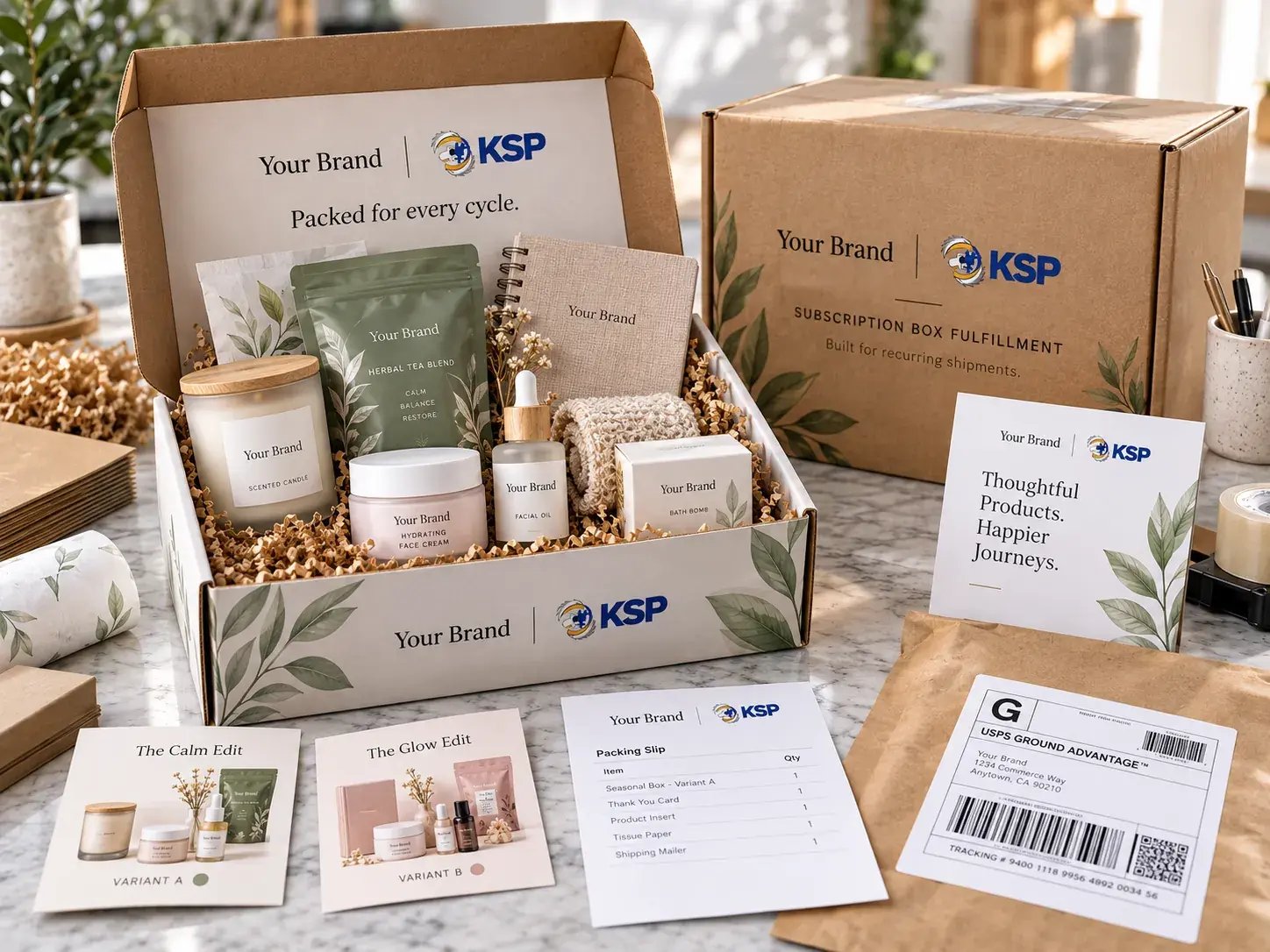
ksp-subscription-box-fulfillment-branded-box-contents
Receiving
How many suppliers and inbound shipments feed each cycle. Ten components from ten vendors cost more to receive than ten from one.
Build method
Pre-kit, kit-to-order or hybrid, and the touches per box: inserts, tissue, folding, sealing.
Variants per cycle
Every variant is its own BOM, first-article build and count.
Storage between cycles
Components waiting for the next build, plus finished boxes held after skips.
Packaging and postage
Box size and weight. Inserts can push a box over a carrier weight break, so weigh a finished sample before you lock packaging.

Send these for an accurate quote

Give every 3PL you compare the same spec. Ask which receiving, assembly, materials, storage and postage charges are inside the quoted rate and which are billed per touch.

  • Active subscribers and cycle frequency
  • Variants per cycle and components per box
  • Supplier count and expected inbound dates
  • Packaging spec or a sample box
  • Platform and how orders are released
  • Target ship date for the first cycle

Subscription Box Fulfillment FAQ

What should I look for in a subscription box fulfillment company?
A written cycle calendar with receiving, spec-lock and ship dates. A BOM-level check on each build, not only a pick scan. A clear answer on who handles skips and pauses. Honest integration with your platform. A quote that separates receiving, assembly, storage and postage. Ask for the first-article process before you sign.
Can KSP handle pauses, skips and swaps?
Your subscription platform manages pauses, skips and swaps. KSP fulfills the order file your platform releases for the cycle, so changes made before the file locks are reflected in what ships. Changes after the build starts are handled case by case.
What does a Cratejoy subscription program need from a 3PL?

Three things, in the order they bite. A locked cycle. Cratejoy groups shipments into batches by target ship date, with a cutoff window per product, so the batch you're shipping this month closes before your warehouse starts building. KSP plans each cycle backward from your ship date and builds against the batch file once it's locked. Insert control. The month's insert card, sample and tissue are part of the bill of materials, so the first-article box for each variant is approved with the right insert in it, and the batch is checked against that build before it closes. Pauses and skips handled upstream. A Cratejoy skip is the seller moving a subscriber's renewal date, and Cratejoy's own rule is that a box already in fulfillment can't be skipped. Any skip, pause or address change made before the batch locks is in the file we build from; anything after that is handled case by case. How orders reach KSP: Cratejoy connects directly to our Logiwa warehouse system, so each batch flows in on its own, and tracking posts back to Cratejoy the moment a box ships. Your shipments mark as shipped, and subscribers get live tracking without anyone exporting a file.

Should I pre-kit my boxes or build them to order?
Pre-kit when variants are few and the subscriber count locks early. Build to order when variants are many or the file changes late. Many programs pre-kit the core box and pick add-ons at pack-out. The table above shows the trade-offs.
How far ahead do components need to arrive?
It depends on your build size and method. Set it on the cycle calendar before the first cycle, dated back from the ship date. Late components are the most common reason a cycle slips.
What happens to leftover boxes and components?
They're counted after each ship wave and reported. You decide whether they carry into the next cycle, get reworked or ship as one-off orders. Agree that rule before the first build.
Do you ship subscription boxes nationwide?
Yes. Boxes ship from one US inventory pool with multi-carrier rate shopping, and daily orders received by 2 PM CST ship the same day.
Is there a minimum volume?
KSP works with brands shipping 500+ orders a month.

Get a Subscription Fulfillment Quote

Send your subscriber count, variants per cycle, components per box and your next ship date. KSP comes back with a cycle calendar and a quote built on that spec.
No spec yet? A photo of a current box and a rough component list are enough to start.