<img alt="" src="https://www.365operation.com/807283.png" style="display:none;">

Supplement Fulfillment Services

KSP stores and ships finished supplements, vitamins and nutraceuticals for brands selling DTC, on marketplaces and into retail. Every inbound lot is recorded with its expiry date at receiving. Orders are allocated first-expiring-first-out, and every shipment is tied to the lot it shipped from, so a recall can be traced to orders.
  • FDA-registered facility
  • 99.999% pick accuracy
  • 2 PM CST same-day cutoff

Veteran-owned 3PL. Built for brands shipping 500+ orders a month.
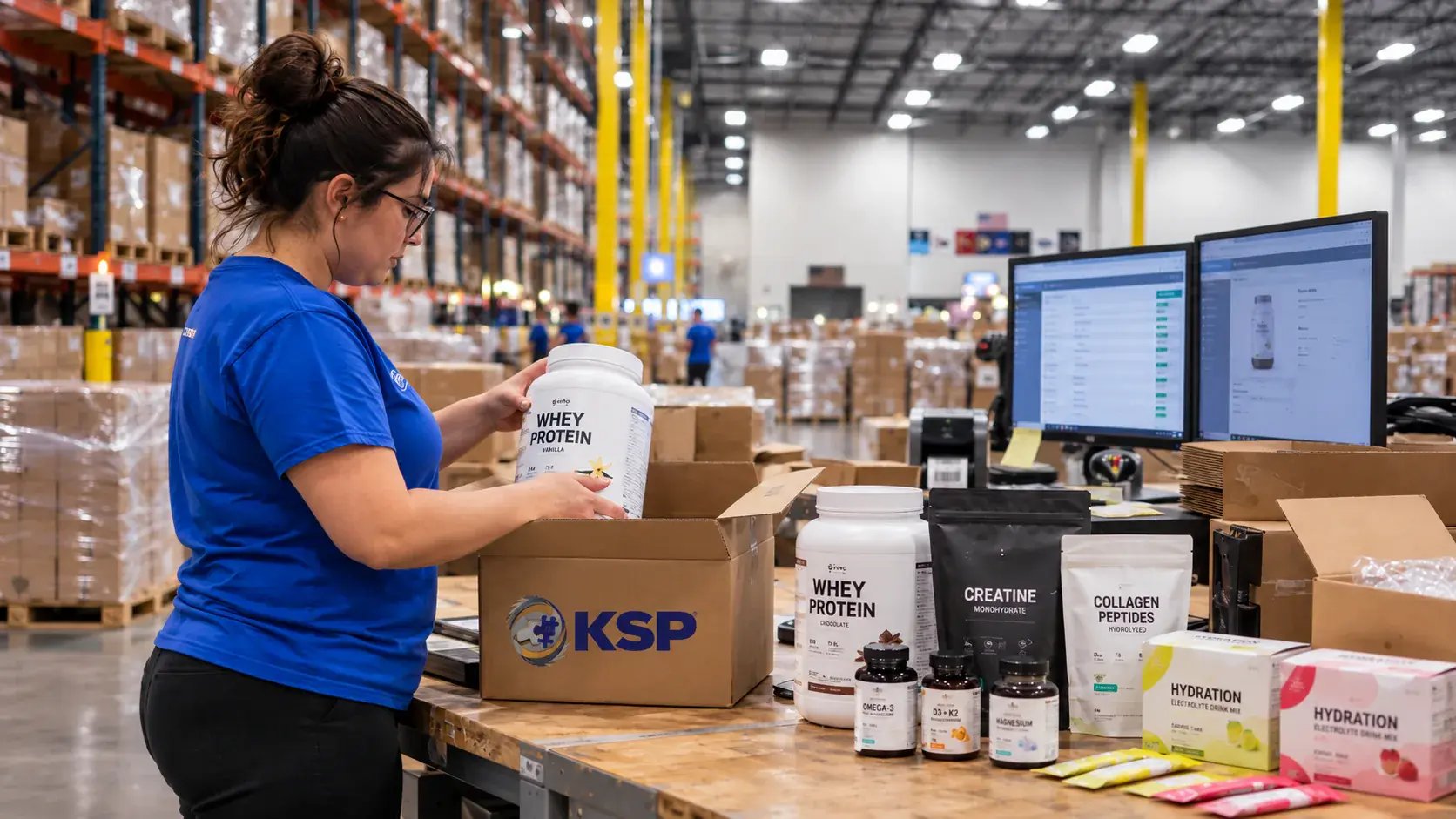
Supplement cases with lot and expiry labels on racking at KSP

What Is Supplement Fulfillment?

 
Supplement fulfillment is storing, picking, packing and shipping dietary supplements for a brand while controlling what's specific to ingestible products: lot numbers, expiration dates and holding conditions. A supplement 3PL receives finished product from your manufacturer and records each lot and expiry. It allocates the oldest-dated stock first and ships to customers, marketplaces and retailers. If a lot is pulled, it can say which orders received it.
 
The pick-and-pack is the same as any ecommerce order. The difference is that every unit has a date and a lot, and both matter after the product ships. Nutraceutical fulfillment, herbal supplements, sports nutrition, weight-management products and powders all run the same way. They need dry, controlled storage, first-expiring-first-out rotation and a lot record per order. Stock that ages out in the warehouse is lost money. Stock that ships short-dated is a returned order or a marketplace problem. See shelf-life rules for health brands.
 

Supplement 3PL Responsibilities: What Your 3PL Handles vs What Your Brand Owns

Buyers ask a supplement 3PL whether it is "FDA-compliant". The useful question is narrower: which part of FDA's rules applies to the warehouse, and which stays with you and your manufacturer.
 
AreaYour 3PLYour brand / manufacturer
Facility registration
KSP's facility is registered with FDA as a food facility, meaning it has the processes and infrastructure necessary to handle your supplements.
 
Your manufacturer registers its own facility. No FDA registration approves a supplement for sale.
Holding conditions
FDA's dietary supplement CGMP rule (21 CFR 111) covers holding as well as manufacturing. The 3PL stores product under conditions that protect identity, purity, strength and composition, and it prevents mix-ups, contamination and deterioration.
Manufacturing, packaging and labeling CGMP stay with you and your contract manufacturer.
Lot and expiry records
Captured at receiving and kept per lot and per order.
You set the expiry dating and the lot code format on the label.
Certificates of analysis
Filed against the lot when your team supplies them.
You and your manufacturer produce the COA and own testing.
Label and claims
Ships what you send; doesn't edit labels or claims.
You own label content, structure/function claims and any disclaimers.
Recalls
Holds the lot in the WMS, identifies shipped orders and reports them to you.
You decide on the recall, notify FDA where required and communicate with customers.
Temperature
Dry, ambient storage. KSP doesn't offer refrigerated or frozen storage.
Tell your 3PL if any SKU needs cold-chain before you sign.
KSP's FDA registration is a facility registration under the Federal Food, Drug, and Cosmetic Act. It is not an FDA approval, certification or endorsement of your product, and this page never uses it that way. Sources: 21 CFR 111.1 (who the rule covers) and 21 CFR 111.455 (holding requirements).

How Supplement Order Fulfillment Works at KSP

Five steps, run in Logiwa WMS, from the dock to the carrier. Lot and expiry travel with the inventory through each one.
  1. Receive and record

    Inbound product is counted against your ASN. Each lot number and expiration date is recorded before the stock becomes available to sell.
  2. Store by lot

    Lots are put away and tracked separately, so a location never mixes stock the system can't tell apart.
  3. Allocate first-expiring-first-out

    Orders pull the earliest-dated sellable lot first (FEFO), which keeps older stock moving before it ages out.
  4. Pick and verify

    Associates scan the tote and each unit, and the WMS rejects a mismatch before packing continues.

How KSP Controls Lots, Expiry and Accuracy

Most supplement errors are dating errors, not picking errors: a short-dated unit ships, or two lots get mixed. Checks go where those happen, at receiving and on the order.

When orders move through fulfillment

  1. Identify the tote

    The associate scans the tote barcode so the pick is tied to the right container.
  2. Verify the item

    The unit barcode is checked against what the WMS expects. A mismatch doesn't register and has to be corrected before the workflow continues.
  3. Measure the packed carton

    Cartons go over certified scales and dimensioners before labels print. The measured weight and dimensions feed the manifest and multi-carrier rate shopping.

Less travel. More time for verification.

60 Locus AMRs move order containers through picking. That cuts associate travel, so more time goes to picking and verification.
 
pick accuracy
99.999%
Locus AMRs on the floor
60
Same-day cutoff
2 PM CST
Fulfilled from KSP's FDA-registered facility in Brooklyn Park, MN: a ~225,000 sq ft building with 29 dock doors.

What Happens When a Supplement Lot Is Pulled

A recall is the brand's decision. The warehouse's job is to stop the lot and tell you who has it, fast. This is the sequence KSP runs.
  1. 01

    Hold the lot

    The affected lot is placed on hold in the WMS, so no new order can allocate it. CHECKPOINT: Lot status set to hold

  2. 02

    Quarantine the stock

    Units still on hand are pulled from pickable locations and kept apart. CHECKPOINT: On-hand count by location

  3. 03

    Trace shipped orders

    Order records are searched by lot to list every shipment that received it. CHECKPOINT: Order list with ship dates and destinations

  4. 04

    Report and disposition

    You get the order list and the on-hand count, then decide whether to return, destroy or rework the stock. KSP carries out the instruction and records it. CHECKPOINT: Disposition record

Where Supplements Sell: DTC, Marketplaces and Retail

Supplement brands rarely sell through one channel. The same lot-controlled inventory can feed your store, marketplaces and retail orders. Marketplaces and retailers set their own rules for remaining shelf life at receipt, so the FEFO rules are set per channel before launch. Running subscribe-and-save? See subscription fulfillment.
DTC storefront Shopify / Shopify Plus
Direct connector
Marketplace (seller-fulfilled) Amazon
Connector
Marketplace Walmart Marketplace
Connector
Wholesale marketplace Faire
Connector
Retail EDI SPS Commerce
EDI via SPS
ERP NetSuite
Connector
Subscriptions CrateJoy
Connector
Subscriptions Recharge
Connector

What Drives Supplement Fulfillment Cost

Two supplement brands shipping the same number of orders can get very different quotes. These are some factors that may affect your final 3PL rate.
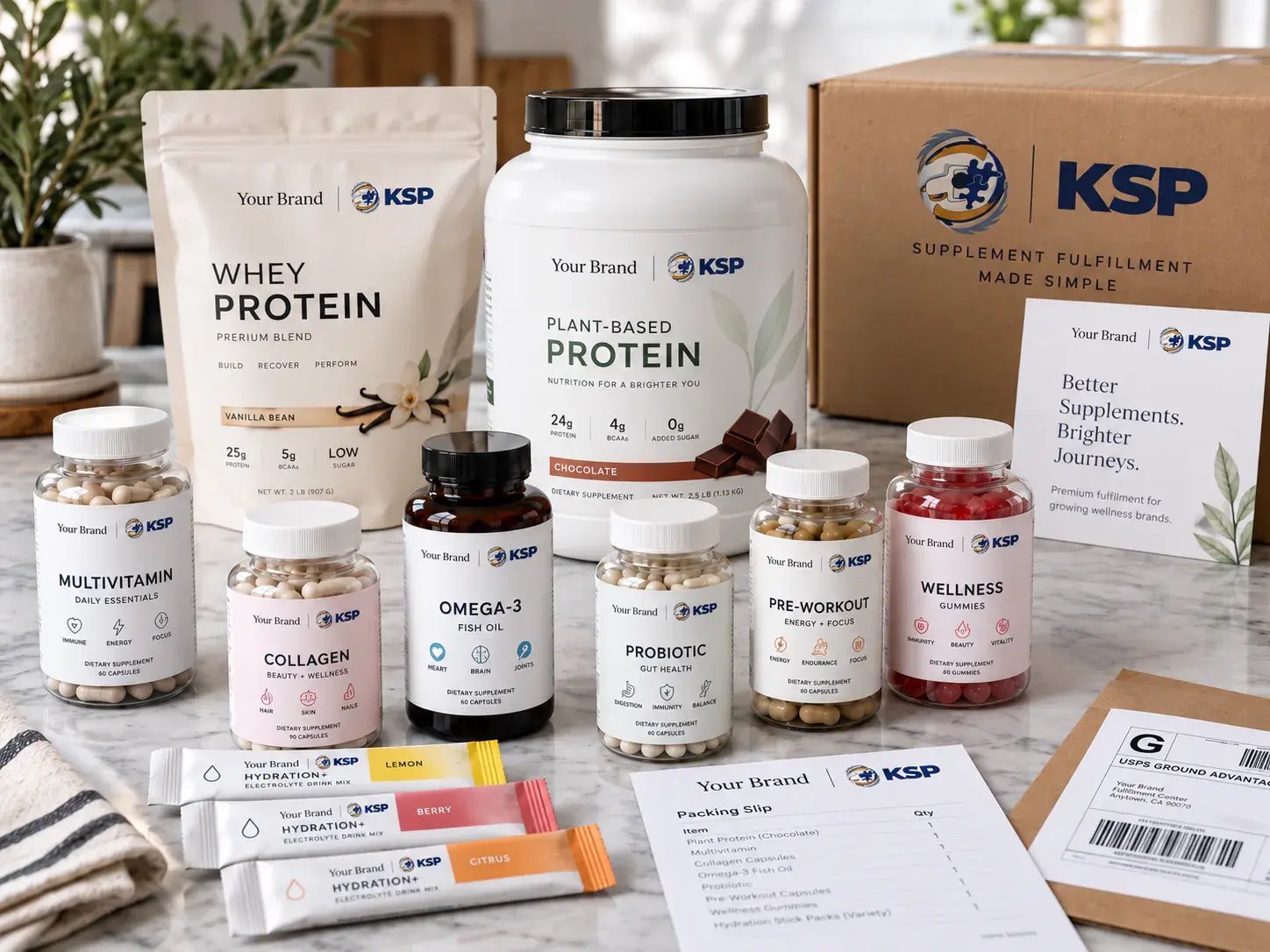
 
ksp-supplement-fulfillment-product-lineup
SKUs and lots
Every SKU, and every active lot of it, is a location and a count. Many flavors or sizes with frequent small production runs cost more to manage than a few SKUs in large lots.
Storage profile
Pallets, cases or shelf-level units, and how long stock sits before it sells. Slow movers also carry expiry risk.
Orders and units per order
Pick and pack are priced per order and per unit, so a three-bottle bundle costs differently from a single.
Packaging and kits
Custom mailers, inserts, samples and bundles add touches. See kitting and assembly.
 
Channel mix and returns
Retail and marketplace orders carry labeling and routing rules. Returns of ingestibles are usually inspected and dispositioned, not restocked.

Send these for an accurate quote

Give every 3PL you compare the same spec. Ask which receiving, storage, pick, packaging and returns charges are inside the quoted rate and which are billed per touch.
 
  • Monthly orders and average units per order
  • SKU count, lot size and typical expiry window
  • Current inventory on hand (pallets or cases)
  • Channels: DTC, Amazon, Walmart, retail EDI
  • Packaging spec and any kits or bundles
  • Any SKU that needs temperature control

Supplement Fulfillment FAQ

What is nutraceutical fulfillment?
Nutraceutical fulfillment is fulfillment for supplements, functional foods and similar health products. The work is standard warehousing and shipping plus lot and expiry control: each lot is recorded at receiving, stock is rotated first-expiring-first-out, and every order keeps a lot record. "Supplement fulfillment" and "nutraceutical fulfillment" describe the same service.
What does KSP's FDA registration cover?
It is a facility registration: KSP's building is registered with FDA as a facility that holds food products, which include dietary supplements. It is not an approval of any product. FDA doesn't approve dietary supplements before sale. Your manufacturer and your brand remain responsible for manufacturing, labeling and claims.
Do you rotate stock by expiration date?
Yes. Lots and expiration dates are recorded at receiving, and orders are allocated first-expiring-first-out, so older stock ships first. If a channel requires minimum remaining shelf life, that rule is set for that channel before launch.
Can you trace a recall to specific orders?
Yes. Each shipped order keeps the lot it shipped from. If a lot is pulled, KSP puts it on hold, quarantines what's on hand and gives you the list of orders that received it. The recall decision and customer notice stay with your brand.
Do you need our certificates of analysis?
Send them with each inbound lot. KSP files them against the lot record so they're on hand when a retailer or marketplace asks. Testing and COA content stay with you and your manufacturer.
Can you store temperature-sensitive supplements?
KSP offers dry, ambient storage. It does not offer refrigerated or frozen storage. If a product needs cold-chain, such as some probiotics, tell us before you sign so we can say plainly whether it fits.
Is "on demand supplement fulfillment" the same as a 3PL?
Usually not. "On demand" or private-label supplement companies manufacture product for you and often ship it too. A 3PL like KSP doesn't manufacture: it receives your finished product from your manufacturer, then stores it and ships it to customers, marketplaces and retailers.
Is there a minimum volume?
KSP works with brands shipping 500+ orders a month.
Do you handle CBD and hemp supplements?
Yes, on a dedicated program. See CBD fulfillment for what changes with hemp-derived products.

Get a Supplement Fulfillment Quote

Send your monthly orders, SKU count, channels and how your lots are dated. KSP comes back with a receiving and rotation plan and a quote built on that spec.
No spec yet? Your current SKU list and a recent month's order count are enough to start.