

What fees do retailers charge suppliers? Retailers charge suppliers slotting fees to put a new product on the shelf, chargebacks when a shipment breaks their rules, and administrative fees on top of costs like recalls and freight handling. In the FTC's 2003 study, the average slotting fee was $9,182 per new product for each regional chain. Francesca's December 2025 vendor agreement charges 5% or 10% of the entire invoice for most compliance misses, and Wakefern's August 2024 supplier terms bill $600 plus $40 for each store that pulls the product to handle a recall.
These retail supplier statistics come from an FTC study of slotting fees and from the documents retailers and distributors hand their suppliers: a published chargeback schedule, supplier documents from two distributors and a beauty retailer's vendor standards. Each line names its source and date.
Several of the chargeback codes below cover warehouse work in fulfillment: the EDI, labels, pallets and ship windows of your retail and wholesale orders. Warehouse-side numbers are in our 3PL fulfillment statistics. This page holds the supplier-side numbers.
What does it cost to get a new product on the shelf?
The slotting fees below come from the Federal Trade Commission's November 2003 staff study, Slotting Allowances in the Retail Grocery Industry. The FTC's 2003 study covers seven retailers and five product categories, with fee data from 1998 to 2001. The FTC says the study is based on a small sample of case studies, may not represent all US retailers, and its results are "suggestive, not probative."
- $9,182 was the average slotting fee per new product (UPC) per regional chain in the FTC's 2003 study, and the median was $6,500.
- $2,313 to $21,768 was the range of average fees from one retailer and market to the next, all five categories combined (FTC, 2003).
- $10,950 for hot dogs and $10,625 for ice cream were the highest category averages per new product (FTC, 2003). In the FTC's 2003 data, pasta averaged $9,667, bread $8,551 and salad dressing $6,819.
- $1.64 million in slotting fees was the FTC's 2003 estimate for a national launch of one new grocery product, reaching 85% of US supermarkets with 85% of those stores paid a fee. Suppliers the FTC interviewed for the same 2003 study put it at $1.5 million to $2 million.
Frozen and refrigerated products paid the highest fees in the FTC's 2003 study. Some of the retailers and suppliers the FTC surveyed suggested that shelf space for refrigerated and frozen products is more limited and more costly, which leads to higher slotting fees.
Why do retailers charge slotting fees, and when do suppliers pay less?
Retailers in the FTC's 2003 study tied the fee to what a new product costs them to set up and the risk that it fails.
- $3.5 million to $4 million a year is what one retailer told the FTC in 2003 it spends evaluating new products. The same retailer told the FTC that one new product can cause 30 to 40 other stocking moves in its distribution center (2003).
- About 70% of new products fail, according to two retailers the FTC interviewed (2003). One said a supplier's willingness to pay slotting shifts the risk of failure back to the manufacturer.
- 80% to 90% of new product launches carry a slotting fee, according to six of the eight suppliers interviewed for the FTC's 2003 study, at least for products that don't ship direct to the store.
- Five of seven retailers the FTC studied in 2003 said slotting fees were less likely, and lower when charged, for products delivered direct to the store (DSD) instead of through the retailer's warehouse.
- All seven retailers in the 2003 FTC study said they have no policy of charging pay-to-stay fees to keep an existing product on the shelf, and that they virtually never use them in the categories studied.
- Four to six months is the minimum shelf time most retailers and suppliers described to the FTC in 2003 for a newly accepted product. Several said a slotting fee does not buy any particular shelf position.
How do retailer chargeback models differ?
Retailers and distributors bill suppliers in three ways: a percentage of the whole invoice, the actual cost plus an administrative fee, or a fee schedule set in your contract. The same late or short shipment produces a very different bill under each.
Percentage of the entire invoice. Francesca's Vendor Compliance Agreement, last updated December 2025, lists 16 chargeback codes, and 12 of them are charged as a percentage of the entire invoice, not of the units that were wrong.
| Violation | Chargeback | Source |
|---|---|---|
| Failing its EDI requirements | 10% of the entire invoice | Francesca's code 4 (Dec. 2025) |
| Late shipment not approved by the buyer at least one week before the ship date | 10% of the entire invoice | Francesca's code 5 (Dec. 2025) |
| Shipping before the start ship date, or with a carrier its logistics team didn't designate | 10% of the entire invoice | Francesca's codes 7 and 9 (Dec. 2025) |
| Improper hang tags, price stickers, packaging or pallet builds | 10% of the entire invoice plus the cost to correct | Francesca's code 10 (Dec. 2025) |
| Product not packed to the PO, including split shipments | 10% of the entire invoice plus the cost to correct | Francesca's code 12 (Dec. 2025) |
| Short shipment beyond the tolerance allowance | 10% of the entire invoice, and the shortage isn't paid | Francesca's code 15 (Dec. 2025) |
| PO routed less than five business days before the start ship window | 5% of the entire invoice | Francesca's code 6 (Dec. 2025) |
| Late, inaccurate or missing paperwork | 5% of the entire invoice | Francesca's code 11 (Dec. 2025) |
| Invoice sent more than two days after the shipment is received | 5% of the entire invoice | Francesca's code 13 (Dec. 2025) |
| Carrier fees the vendor causes, such as truck ordered not used | The fee plus 10% ($250 becomes $275) | Francesca's code 16 (Dec. 2025) |
At francesca's December 2025 rate of 10%, a missed EDI requirement on a $20,000 invoice would cost $2,000, whatever the size of the mistake. Francesca's tolerance allowance, based on historical rates of damages, is 1.5% for clothing and 3% for jewelry, accessories, gifts, footwear and home products (December 2025).
Actual cost plus administrative fees. Under its August 2024 Supplier Relationship terms, Wakefern Food Corp., which supplies ShopRite stores and sets the packaging rules for ShopRite private-label products, bills back the full cost of a freight miss plus administrative fees, and sets flat charges for recalls and packaging violations.
- Full charges plus administrative fees are what Wakefern bills back for freight shipped unpalletized or palletized against its specifications, including detention, sorting, storage, redelivery and labor (Wakefern Supplier Relationship terms, August 2024).
- $600 covers Wakefern's recall bulletin to stores, plus $40 for each store that confirms within seven days that it pulled the product (Wakefern Supplier Relationship terms, August 2024).
- $1,000 per violation is Wakefern's liquidated damages for changing ShopRite private-label packaging without approval from its Creative Services Division (Wakefern Supplier Relationship terms, August 2024).
- $50 was the administrative fee to process a paper invoice, against $5 per invoice sent through Wakefern's internet portal, in Wakefern's 2017 Accounting Guidelines. Those were the 2017 terms, so check them against your current Wakefern agreement.
Fees set in your contract. KeHE Distributors' Supplier Policies and Procedures, effective November 1, 2025, keep the dollar amounts in a separate Fee Schedule that each supplier signs.
- Landed cost is the basis for KeHE's refunds and charges on returned or discontinued product: your most recent price plus all freight, handling, fees and expenses to move it into KeHE's warehouses (November 2025).
- The lower of the PO net price or your invoice is what KeHE pays (November 2025).
- No payments go out to a KeHE supplier in debit balance, when the supplier owes KeHE more than KeHE owes on open invoices, until that balance clears (November 2025).
Our guide to vendor chargebacks explains why retailers fine suppliers.
What deadlines do supplier contracts set?
Each deadline below comes from a retailer's or distributor's 2025 supplier document, with what that document ties to it.
| Deadline | Source | What the document says |
|---|---|---|
| 5 business days before the start ship window to route a PO | Francesca's (Dec. 2025) | 5% of the entire invoice |
| 2 days after receipt to send the invoice | Francesca's (Dec. 2025) | 5% of the entire invoice |
| 5 business days to dispute a chargeback | Francesca's (Dec. 2025) | Francesca's decides within 2 business days |
| 180 days from a deduction to dispute it | KeHE Supplier Policies (Nov. 2025) | Your objection is waived |
| 14 days to pay by check when deductions exceed open invoices | KeHE Supplier Policies (Nov. 2025) | KeHE can collect at any time |
| 28 days out of stock before written notice is due | KeHE Supplier Policies (Nov. 2025) | KeHE can share the notice with its customers |
| 60 days of not shipping a product as ordered | KeHE Supplier Policies (Nov. 2025) | The product can be discontinued |
| 90 days' notice before any change to pack, size or description | KeHE Supplier Policies (Nov. 2025) | Changed product can't fill POs until then |
| 6 months from first receipt, for every new product | KeHE Supplier Policies (Nov. 2025) | You take back unsold units at landed cost |
| 2 years of records open to audit, longer if a retailer requires | KeHE Supplier Policies (Nov. 2025) | Third-party audit claims are deducted after 30 days' notice |
Wakefern's 2017 Accounting Guidelines set two older clocks: suppliers had 3 days after a store delivery to send proof of delivery to be paid within terms, and 30 days from the invoice or check to challenge a deduction, with 15 business days allowed for Wakefern's response. Confirm both against your current Wakefern agreement.
KeHE adds one more condition to new products. All initial orders into a new KeHE warehouse stay on payment hold until they have fully sold through (November 2025), so you finance the first fill yourself.
What insurance and audits do retailers and distributors require?
KeHE's New Supplier Document Checklist includes the certificate of product liability insurance, and a supplier submits that checklist to be activated in KeHE's network (November 2025).
- $2 million per occurrence and $2 million in the aggregate is KeHE's minimum for general and product liability, with KeHE named as an additional insured (November 2025).
- $5 million per occurrence is KeHE's minimum for vitamins, minerals, herbs, nutritional supplements, seafood and meats (November 2025).
- $5 million per occurrence in general liability and $2 million in auto liability, where it applies, are Wakefern's minimums, with Wakefern named as an additional insured on all liability policies (August 2024).
- A- or better from A.M. Best is the rating Wakefern requires of the insurers behind a supplier's coverage, and coverage can't be cancelled without 30 days' written notice to Wakefern (August 2024).
Ulta Beauty's Vendor Standards, revised March 2024, add data security, sanctions and audit rules:
- AES-256 encryption, at minimum, is what Ulta Beauty's March 2024 standards require for its confidential information at rest and in transit, plus NIST Special Publication 800-53 controls for that data. A vendor that can't meet them must tell Ulta Beauty right away (March 2024).
- 50 percent ownership is the sanctions line: no business with any company 50% or more owned by people or entities on the US Treasury's SDN list, even if the company itself isn't listed (Ulta Beauty, March 2024).
- Annual re-certification of the standards when Ulta Beauty requires it, and access for Ulta Beauty or its agents to audit a vendor's facilities and records at all times (March 2024).
What should I check before signing a vendor agreement?
- Find the penalty model first. Under a percentage-of-invoice schedule like francesca's (December 2025), one paperwork miss on a large PO can cost more than the cases that were wrong. Under cost-plus billing like Wakefern's freight terms (August 2024), the bill follows what the miss cost the distributor, plus administrative fees.
- Put every contract clock on a calendar the day you sign. Miss KeHE's 180-day window to dispute a deduction (November 2025) and your objection is waived. Francesca's gives you five business days to dispute a chargeback (December 2025).
- Price insurance by product category. A supplement brand selling through KeHE needs $5 million per occurrence, not the $2 million general minimum (KeHE, November 2025).
What do these numbers mean for the warehouse that ships your retail orders?
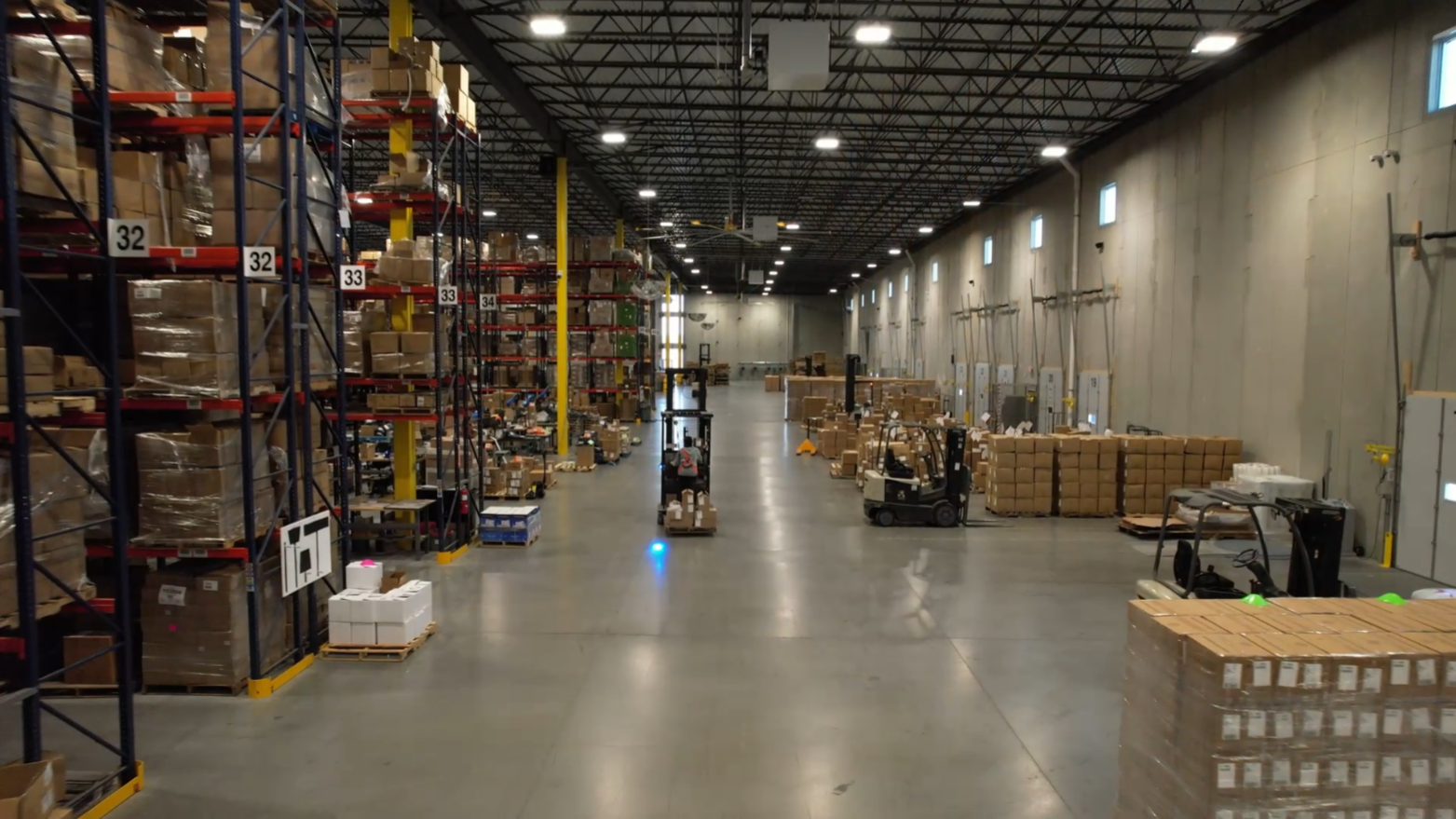
Most of the francesca's December 2025 codes above are warehouse events: an EDI document, a ship window, a pallet build, a label, a short case, a carrier choice. At KSP, purchase orders arrive over EDI through SPS Commerce and are allocated against live stock before they release to the floor. Every case and unit barcode is scanned against the order, and a mismatch stops the workflow until it's corrected. UCC-128 carton labels are verified before cartons close, and the ASN is built from what was scanned onto each pallet and sent before the truck leaves. Freight leaves on LTL or truckload from 29 dock doors, and KSP books delivery appointments and works with the retailer's carrier on routed freight.
KSP holds 99.999% order accuracy across 32.1M orders. KSP built and prepared 611 outbound pallets for 611 Target stores within four weeks of receiving the product, and all 611 stores received their shipments on time, ahead of the installation schedule, with no damage or shortages.
About these sources
- Federal Trade Commission, Slotting Allowances in the Retail Grocery Industry: Selected Case Studies in Five Product Categories, November 2003.
- Francesca's, Vendor Compliance Agreement, last updated December 2025.
- KeHE Distributors, Supplier Policies and Procedures, effective November 1, 2025.
- Wakefern Food Corp., Supplier Relationship terms, August 2024, and Accounting Guidelines, posted 2017.
- Ulta Beauty, Vendor Standards, revised March 2024.
Send us the vendor manuals before your next PO
A percentage-of-invoice chargeback turns one late routing request into a charge on the entire invoice. Most of francesca's December 2025 chargeback codes cover warehouse work: the EDI documents, the ship window, the pallet build, the labels and the case count.
Send us your retailer and distributor list, their vendor manuals and your upcoming ship dates. A KSP rep gets back to you within 1 business day and walks you through an invoice built on your business, line by line.