

What are slotting fees, and how much do they cost? Slotting fees are what a retailer or distributor charges a supplier to stock a new product, an average of $9,182 per new product for each regional chain in the FTC's 2003 grocery study. Suppliers pay in cash, invoice deductions or free product, and the same 2003 FTC study put a national launch at about $1.64 million.
Slotting fees are what a retailer charges a supplier to put a new product on its shelves and into its warehouse, paid in cash, as an invoice deduction or in free product. The Federal Trade Commission's November 2003 staff study found an average of $9,182 per new product for each regional chain, with a median of $6,500.
Beyond the fee, a retail launch pays for fulfillment and freight on each retail and wholesale order: cases built to the retailer's spec, EDI documents, labels, pallets and ship windows.
What are slotting fees and slotting allowances?
Slotting fees and slotting allowances are the same payment under two names. The FTC's 2003 study defined it as anything of value a retailer receives as a condition for first placing a product on its store shelves or first giving it warehouse space. That can be a lump sum, payments spread over time, or payments tied to volume commitments, and it can come as cash, free goods or anything else of value.
Pay-to-stay is a different payment, made to keep an existing product on the shelf for another period, usually a year. All seven retailers in the FTC's 2003 study said they had no policy of charging it and virtually never used it in the categories studied. Most said they would rather drop a product whose sales don't justify its space.
Retailers in the study collected slotting in at least four ways, and each one reaches your cash at a different time:
- One retailer invoiced the supplier and, if the fee wasn't paid within 15 days, deducted it from the first invoice. It let some smaller vendors pay over time.
- A second cut the cost per case on the new product.
- A third used a bill-back across every item on the promotional contract. Three new products at $5,000 each made a $15,000 fee, billed against all seven products on the deal.
- A fourth took the fee as a deduction off an invoice and never tied it to a specific item.
A deduction off your first invoice means the opening order pays the fee before it pays you.
How much do slotting fees cost?
The FTC's 2003 study collected fee data from seven grocery retailers across five product categories, covering 1998 to 2001. The FTC says the sample is small, may not represent every US retailer, and its results are "suggestive, not probative." It reports what retailers were actually paid, product by product.
| Category | Average slotting fee per new product, per regional chain (FTC, 2003) |
|---|---|
| Hot dogs | $10,950 |
| Ice cream | $10,625 |
| Shelf-stable pasta | $9,667 |
| Bread | $8,551 |
| Shelf-stable salad dressing | $6,819 |
| All five categories | $9,182 (median $6,500) |
The averages ranged from $2,313 at one retailer to $21,768 at another. For a national launch, data from two retailers put the cost at about $1.64 million in slotting for one new product, sold in 85% of US supermarkets with 85% of those stores paid a fee. The suppliers the FTC interviewed estimated $1.5 million to $2 million.
Why do slotting fees vary so much?
Retailers told the FTC the fee pays for the work and risk of adding a product. Only one retailer put numbers on it. It spent $3.5 million to $4 million a year evaluating new items and listed the cost of accepting one:
- 10 to 20 people managing shelf space across that chain's stores in one region
- $1,000 in labor to put the item on the shelf in all of those stores
- $1,200 to add the item to its distribution center, where one new item can cause 30 to 40 other stocking moves
- $600 to set the item up in its computer system
- Labor and markdowns to clear out the product it replaces
- The risk that the item fails, since about 70% of new items do
From there, the price moves with four things.
Category. Frozen and refrigerated products paid the most in the FTC data because that shelf space costs more to expand and new frozen products compete for a fixed amount of it. One retailer's documents set fees from $500 for direct-store-delivery items to $10,000 for other categories, with about $6,500 for frozen and refrigerated. Another retailer collected slotting on over 50% of new ice cream and grocery items, but on only 10% of produce.
Your pitch. Retailers said the amount depends on how many suppliers want the same space and what each is offering, plus your consumer testing, your track record with new products and the advertising and promotion behind the launch.
Region. Fees varied by division and market. One retailer said that when a competitor in the region charges a higher rate, other retailers hear about it and ask for the same.
Waivers for smaller suppliers and proven products. Five of the seven retailers said they would waive or reduce slotting for a vendor that pays slotting to no one in the market, for a product with proven consumer demand, or for minority-owned, regional and entrepreneurial suppliers. Four used test introductions in a limited number of stores before a wider rollout.
Do direct-store-delivery products pay lower slotting fees?
Often, yes. Five of the seven retailers in the FTC study said slotting fees were less likely for products delivered direct to the store (DSD), and lower when they were charged. With DSD, the supplier delivers to each store and usually stocks the shelf, so the retailer skips warehousing, distributing and stocking the product. That retailer work is a big part of what the fee pays for.
DSD isn't free of slotting everywhere. One retailer in the study still asked for and received slotting on many branded bread products shipped DSD, and another asked for slotting on all products, DSD included.
With DSD, you pay for the trucks, the routes and the people who stock shelves store by store. DSD items in the study included hot dogs, bread and many ice cream products. A brand without its own delivery routes ships through the retailer's distribution centers, where the fee, the routing guide and the chargebacks all apply.
What costs come with slotting fees?
Three more costs arrive with the slotting fee.
Free fill. Free fill is free product you supply for new distribution points and new store openings. KeHE Distributors' Supplier Policies and Procedures, effective November 1, 2025, require suppliers in its Placement Programs to give one case at no charge for each new point of distribution and each new store opening, or free product as the retailer sets it. KeHE charges that back at its wholesale price. When a retailer requires a separate Slotting Program, KeHE bills you what the retailer charged KeHE plus applicable fees. KeHE also charges a new-product set-up fee and an introductory allowance for each SKU in each of its distribution centers.
First-year promotions. Retailers in the FTC study also took introductory allowances, usually per unit, such as one dollar off per case on every purchase in the first 60 days. Other funds covered advertising, coupons, in-store displays and ads in the retailer's circular. Two retailers said these payments come on top of slotting, never in place of it. Two retailers sometimes used failure fees, paid if the product fails within a set period. Five had suppliers commit to buy back unsold product: you pick up discontinued items and credit the retailer for what it paid.
Warehouse slotting on both sides. The retailer's fee covers its own distribution center work, the $1,200 setup and the 30 to 40 stocking moves listed above. On your side, a new retail SKU needs case packs, carton labels and pallet builds to the retailer's spec. A late or short shipment or a label that won't scan brings vendor chargebacks, deducted from what the retailer pays you.
The full FTC fee numbers and the chargeback schedules in supplier agreements are in our retail supplier statistics.
How do you budget and negotiate slotting fees?
Turn the fee into a sales target. Divide the fee by your gross profit per unit, the number of stores and the weeks you have. Most retailers and suppliers in the FTC study said an accepted product stays on the shelf for a reasonable time, at least four to six months. For example, the FTC's $9,182 average fee for one product in a 50-store chain, at $1.50 of gross profit per unit, needs about 5 units per store per week for 26 weeks just to earn the fee back. If your category sells half that, renegotiate or wait.
Ask how the fee will be collected. If it comes off your first invoice, plan the cash for the opening order without that payment. If it is billed back across your whole line, your existing products pay part of it.
Ask what the fee buys. Several retailers and suppliers told the FTC that a slotting payment does not buy any particular shelf position.
Use a broker if the buyer won't move. NielsenIQ's May 2022 slotting explainer suggests going through a broker, who negotiates the fee with the retailer on your behalf.
Ask for a test. A limited-store test, a reduced fee for a small or regional supplier, or a waiver for a product with proven demand are all options retailers described to the FTC.
Get the distributor's fee schedule before you sign. KeHE's November 2025 policies keep the dollar amounts for set-up fees, introductory allowances and other charges in a separate Terms Form and Fee Schedule.
How do you protect the shelf time a slotting fee pays for?
An accepted product gets those first four to six months on the shelf to get established. A late, short or mislabeled shipment in those months leaves an empty slot you already paid for, and the retailer deducts a chargeback from your payment. Our guide on how to get your product into stores covers each step from the pitch to the first shipment.
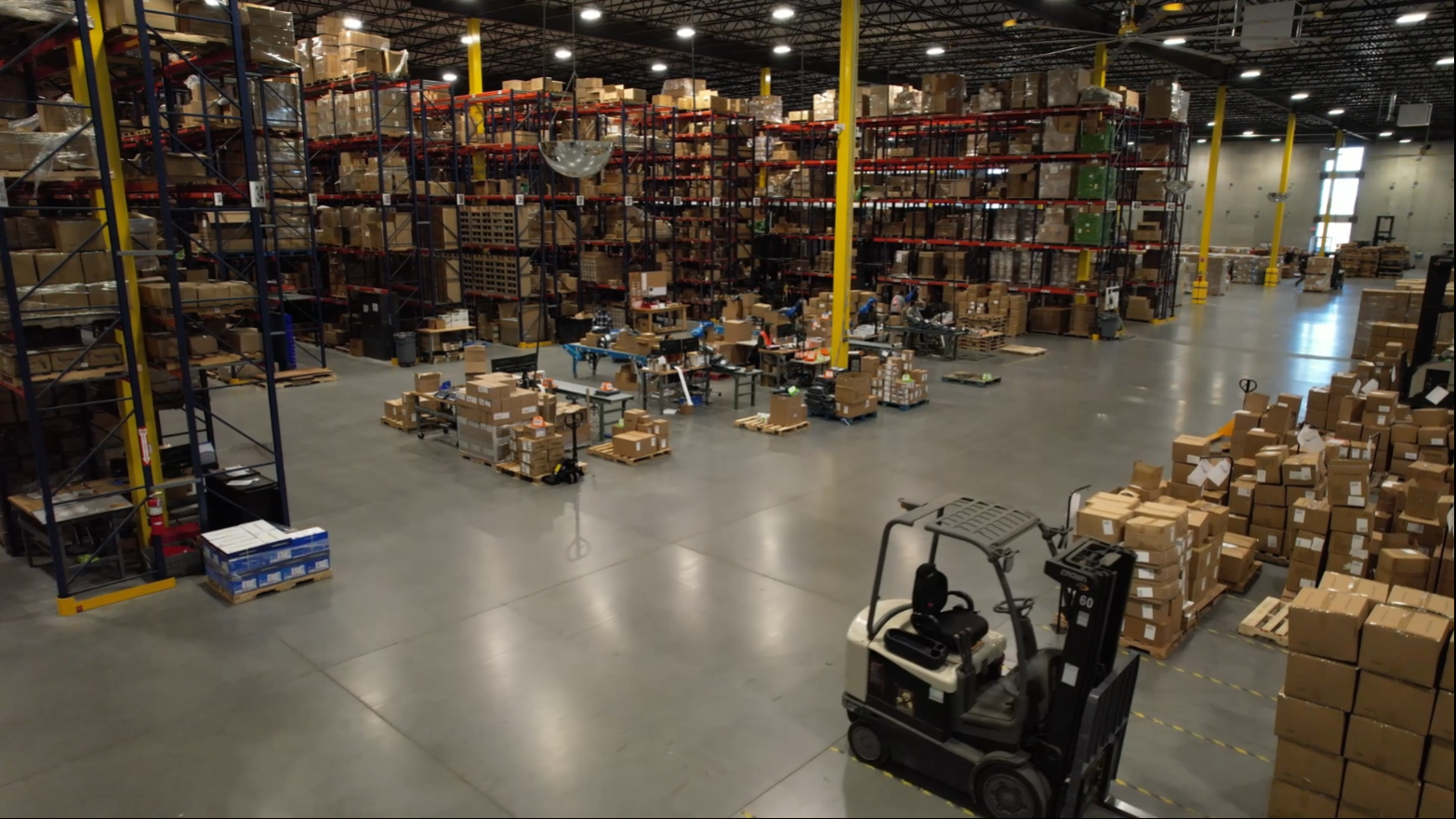
At KSP, retail purchase orders arrive over EDI through SPS Commerce and are allocated against live stock from the same inventory as your ecommerce store, so a big PO never strands the stock your website needs. Every case and unit barcode is scanned against the order, UCC-128 carton labels are verified before cartons close, and the ASN is built from what was scanned onto each pallet and sent before the truck leaves.
KSP holds 99.999% order accuracy across 32.1M orders. For one launch, KSP built and prepared all 611 outbound pallets for 611 Target stores within four weeks of receiving the product, and all 611 stores received their shipments on time, ahead of the installation schedule, with no damage or shortages.
About these sources
- Federal Trade Commission, Slotting Allowances in the Retail Grocery Industry: Selected Case Studies in Five Product Categories, November 2003.
- KeHE Distributors, Supplier Policies and Procedures, effective November 1, 2025.
- NielsenIQ, Slotting Fees and Slotting Allowances, May 2022.
Price the warehouse side of your retail launch
You budgeted for the slotting fee. The free fill, the first purchase order and the chargebacks all depend on how your cases, labels and pallets leave the warehouse.
Send us the retailer, your SKUs and your first ship window. A KSP rep gets back to you within 1 business day and walks you through an invoice built on your business, line by line.